
Arsenocyl Injection for Animal Use
Animal health is an essential part of responsible pet ownership, livestock management, and veterinary practice. Choosing the right veterinary product requires understanding its intended purpose, ingredients, safety precautions, and suitability for the animal receiving treatment.
Understanding veterinary products is an important part of responsible animal care. Whether you manage livestock, care for farm animals, or work with animals professionally, knowing a product’s intended purpose, ingredients, safety requirements, and proper use can help you make better decisions about animal health.
What Is Arsenocyl in Animal Care?
Arsenocyl Injection is a specialized veterinary supplement formulated with pentavalent organic arsenic (sodium cacodylate), iron, and copper. It is primarily utilized as a metabolic stimulant and performance aid for large animals, particularly performance horses, camels, and livestock. The drug works by stimulating the production of red blood cells (erythropoiesis) to enhance oxygen transport, improve appetite, and promote overall vitality
Arsenocyl 100ml injectable solution is a precise veterinary classification, active ingredients, approved uses, and suitability for particular animal species should be confirmed from the manufacturer’s label and authoritative veterinary documentation before use.
The name and bottle size alone are not enough to establish what a product treats. Animal owners should verify the formulation, intended indication, administration method, and any applicable restrictions before incorporating it into an animal-care routine.
This guide explains how to evaluate Arsenocyl, what potential benefits can legitimately be assessed, which safety questions matter most, and how to choose an appropriate course of action with veterinary guidance.
What Is Arsenocyl Injection Used for ?
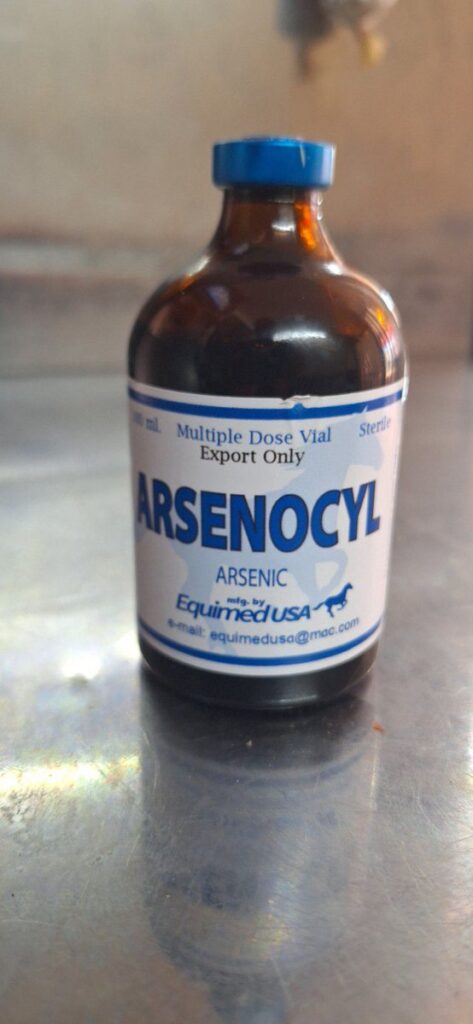
Arsenocyl 100ml
Arsenocyl Injection For Animal Use
Arsenocyl injectable solution for horses , camels is indicated to promote recovery from poor nutritional states, after worming or during hard training or convalescence from illness or injury.
The intended use of Arsenocyl must be established from its official product label, package insert, or manufacturer documentation. Without verified product information, it would be inappropriate to claim that it treats a specific disease, prevents infection, improves growth, or supports a particular body system.
When evaluating a veterinary product, begin by identifying the following details:
- Product classification: Determine whether it is a veterinary medicine, supplement, disinfectant, or another type of animal-care product.
- Active ingredients: Check the exact composition and concentration listed on the packaging.
- Target species: Verify whether the product is intended for cattle, goats, sheep, poultry, companion animals, or another species.
- Approved indication: Identify the specific condition or purpose for which it is authorized or recommended.
- Administration method: Establish whether it is oral, injectable, topical, or intended for another route.
- Restrictions: Review contraindications, withdrawal periods for food-producing animals, storage instructions, and applicable regulatory requirements.
These checks help distinguish a product’s actual documented uses from assumptions based on its name, marketing description, or informal recommendations.
Why product verification matters
Two veterinary products can have similar names while containing different ingredients or serving different purposes. A product that is appropriate for one species or condition may be unsuitable for another.
For example, a treatment approved for cattle should not automatically be given to goats or poultry. Differences in metabolism, body weight, disease susceptibility, and food-safety requirements can affect whether a treatment is appropriate.
The safest approach is to identify the product precisely before deciding whether it belongs in an animal’s care plan.
What Are the Potential Benefits of Arsenocyl in Animal Care?
The benefits of Arsenocyl cannot be reliably established without its verified formulation and intended indication. Nevertheless, understanding how to evaluate the potential benefits of a veterinary product can help animal owners make informed decisions.
1. Supporting appropriate treatment decisions
A veterinary product can provide value when its documented indication matches an animal’s diagnosed condition. The first step is confirming that the product is intended for the specific problem being addressed.
Do not assume that a product is suitable simply because another animal owner has used it successfully.
2. Helping establish a structured animal-care routine
Accurate product information makes it easier to follow a veterinarian’s treatment plan, maintain administration records, and monitor an animal’s response.
A practical record should include the animal’s identification, the product name, the prescribed amount, the date and time of administration, and any observed changes.
3. Improving treatment traceability
For livestock owners and farm managers, documenting veterinary products helps maintain treatment histories and supports compliance with applicable food-safety and animal-health requirements.
Traceability is particularly important when withdrawal periods or restrictions on meat, milk, or eggs apply.
4. Supporting informed purchasing decisions
Checking the label, manufacturer, packaging, expiry date, and applicable authorization before purchasing a veterinary product helps reduce the risk of acquiring an unsuitable, incorrectly identified, or improperly stored product.
Important: These are general benefits of responsible veterinary-product evaluation, not proven product-specific benefits of Arsenocyl. Specific claims should only be added when supported by reliable documentation.
Administration Safety & Regulatory Guidelines
| Parameter | Guideline / Constraint |
|---|---|
| Dosing Rule | Must not be used for continuous or indefinite treatment. |
| Rest Period | A minimum period of at least one month (30 days) must elapse before a treatment cycle can be repeated to avoid cumulative tissue accumulation. |
| Meat Withholding Period | 28 days for horses intended for consumption. |
| Combination Therapy | Can be safely combined with standard veterinary vitamins and minerals to optimize the raw building blocks required for red blood cell generation. |
Is Arsenocyl Safe for Animals?
Safety depends on the exact formulation, species, health status, dose, route of administration, and other treatments an animal may be receiving.
A product’s availability for purchase does not, by itself, establish that it is safe for every animal or every condition.
Before use, verify the following:
- The product is correctly identified and intended for the animal species concerned.
- The active ingredients and concentration are clearly documented.
- The product is authorized for the intended purpose in the relevant jurisdiction, where authorization is required.
- The dosage and administration instructions come from an appropriate official label or veterinarian.
- Contraindications, interactions, adverse effects, and relevant food-animal restrictions have been reviewed.
- The product has been stored correctly and is within its expiry date.
What if the product contains potentially toxic ingredients?
Do not infer an ingredient’s presence from the product name alone. Instead, check the actual composition.
If the label identifies arsenic or another potentially toxic substance, do not administer the product unless its intended use and safety have been established by an appropriately qualified veterinary professional and the relevant regulations permit that use.
If an animal develops unexpected symptoms after exposure, contact a veterinarian or animal poison-control service where available. Do not attempt to induce vomiting or administer home remedies unless instructed by a professional.
How to Use Arsenocyl Correctly
There is no responsible way to provide a universal Arsenocyl dosage without confirming its formulation, concentration, intended species, and official directions.
Use this verification process before administration.
Step 1: Read the official product label
Check the active ingredients, product classification, target species, approved indications, administration route, storage requirements, and expiry date.
If the label is incomplete or difficult to interpret, request clarification from the manufacturer or a veterinarian.
Step 2: Identify the animal and the health concern
Record the species, age, approximate body weight, symptoms, duration of illness, existing medical conditions, and any other treatments being used.
These details can influence the veterinarian’s decision about whether a particular product is appropriate.
Step 3: Confirm the dose and administration route
Follow the product-specific instructions provided by the manufacturer or veterinarian. Do not estimate a dose from bottle size, copy a dosage from an unrelated product, or extrapolate between animal species.
Step 4: Monitor the animal
Observe the animal for changes in appetite, activity, symptoms, and any unexpected reaction. Follow the veterinarian’s monitoring instructions and report deterioration promptly.
Step 5: Maintain treatment records
Record when the product was administered, who administered it, and any response or adverse effects. For food-producing animals, document and follow all applicable withdrawal requirements.
Common Mistakes to Avoid When Choosing Veterinary Products
Animal owners can reduce avoidable risks by avoiding several common mistakes.
Choosing a product based on its name alone. A product name does not establish its composition, effectiveness, or approved purpose.
Using another species’ dosage. Different species may respond differently to the same substance. Always verify species-specific directions.
Treating symptoms without identifying the cause. Similar symptoms can arise from different diseases, nutritional problems, parasites, environmental conditions, or toxic exposures. An incorrect treatment may delay appropriate care.
Ignoring product quality. Check packaging integrity, expiry dates, storage conditions, manufacturer details, and the source of purchase.
Assuming a claimed benefit is clinically proven. Marketing statements should be distinguished from label indications, controlled studies, and independent veterinary evidence.
Overlooking food-safety requirements. Treatments for animals producing milk, meat, or eggs may be subject to specific restrictions and withdrawal periods.
Arsenocyl 100ml: What Should Buyers Check?
The referenced Arsenocyl 100ml product page is the appropriate starting point for checking the seller’s description. Before purchasing, compare the information available there with the manufacturer’s official documentation.
Use this checklist:
| What to check | Why it matters |
|---|---|
| Full product name | Helps confirm the exact product |
| Active ingredients and concentration | Establishes what the product contains |
| Intended species | Helps prevent inappropriate use |
| Official indication | Clarifies the documented purpose |
| Manufacturer information | Supports product identification and traceability |
| Label instructions | Provides product-specific administration information |
| Expiry date and packaging | Helps assess product condition |
| Applicable authorization | Helps verify regulatory compliance |
| Food-animal withdrawal requirements | Protects food safety where relevant |
A 100 ml bottle describes the container volume, not the correct dose, strength, duration of treatment, or number of animals the product can treat.
If important details are missing from the seller’s page, contact the seller or manufacturer before purchasing or administering the product.
How to Choose the Right Animal-Care Treatment
Selecting a veterinary product should follow a clear decision-making process.
First, identify the animal’s symptoms and arrange a veterinary assessment when appropriate. Next, establish the likely diagnosis and determine whether medication is necessary. Then compare suitable products based on their documented indications, ingredients, safety profile, administration requirements, and local authorization.
For livestock, also consider the practical requirements of administration, herd management, treatment records, and food-safety compliance.
Price and availability can influence purchasing decisions, but they should not outweigh product suitability or animal safety.
For an unfamiliar product such as Arsenocyl, verified documentation is more useful than an unsupported recommendation. Antimicrobial Peptides in Livestock
Frequently Asked Questions About Arsenocyl in Animal Care
1. What is Arsenocyl in animal care?
Arsenocyl is the name of a product listed on the referenced retail page. Its exact classification, formulation, intended animal species, and documented uses need to be confirmed through its official label or manufacturer information.
2. What is Arsenocyl 100ml used for?
The 100 ml designation indicates the stated container volume. It does not establish the product’s intended use. Check the official indication and ingredients to determine what the product is designed for.
3. Is Arsenocyl a veterinary medicine?
Its classification should be verified from the packaging, manufacturer documentation, and applicable regulatory records. Do not assume it is an authorized veterinary medicine solely because it is sold on a product page.
4. Can Arsenocyl be used for cattle, goats, or sheep?
Suitability for cattle, goats, sheep, or other species must be confirmed individually. Never transfer dosing instructions between species without veterinary guidance.
5. What is the recommended Arsenocyl dosage for animals?
A safe, product-specific dosage cannot be provided without verified composition, concentration, target species, and official directions. Follow the relevant product label and veterinarian’s instructions.
6. Does Arsenocyl have any side effects?
Potential adverse effects depend on the actual ingredients, dose, administration route, and animal species. Consult the official safety information and a veterinarian for product-specific guidance.
7. Can Arsenocyl be used for poultry?
Poultry use should only be considered if the product’s official documentation specifically supports that species and purpose. Food-safety restrictions may also apply to birds raised for meat or eggs.
8. Is Arsenocyl suitable for pregnant or lactating animals?
Do not assume it is safe during pregnancy or lactation. Check the official contraindications and obtain veterinary advice before use.
9. Can Arsenocyl be mixed with other veterinary medicines?
Compatibility and interaction risks depend on the formulation and the other products involved. Ask a veterinarian or qualified veterinary pharmacist before combining treatments.
10. Where can I find information about Arsenocyl 100ml?
Start with the referenced Arsenocyl 100ml product listing. For clinical and safety decisions, confirm the details against the manufacturer’s documentation and relevant veterinary authorities.
11. What should I do if an animal reacts badly after receiving Arsenocyl?
Contact a veterinarian promptly and provide the product packaging, the amount administered, the time of exposure, the animal’s weight, and the symptoms observed. Seek emergency veterinary assistance for severe or rapidly worsening symptoms.
12. Is Arsenocyl suitable for routine animal-health maintenance?
That depends on its verified indication. A product should not be used routinely for prevention or general maintenance unless that use is supported by its official instructions and appropriate veterinary advice.
Final Thoughts
Understanding what Arsenocyl is in animal care requires more than identifying a product name or bottle size. The essential questions concern its ingredients, intended species, documented uses, safety profile, and regulatory status.
Animal owners should verify these details before purchasing or administering the product. Veterinary guidance is particularly important when the animal’s condition is unclear, the product’s composition is uncertain, or food-safety requirements may apply.
For further information, consult the Bdneny Equine Therapy product listing and seek the manufacturer’s official documentation when product-specific details are unavailable.
Responsible animal care begins with accurate information, appropriate diagnosis, and the correct use of verified veterinary products.
