
Description
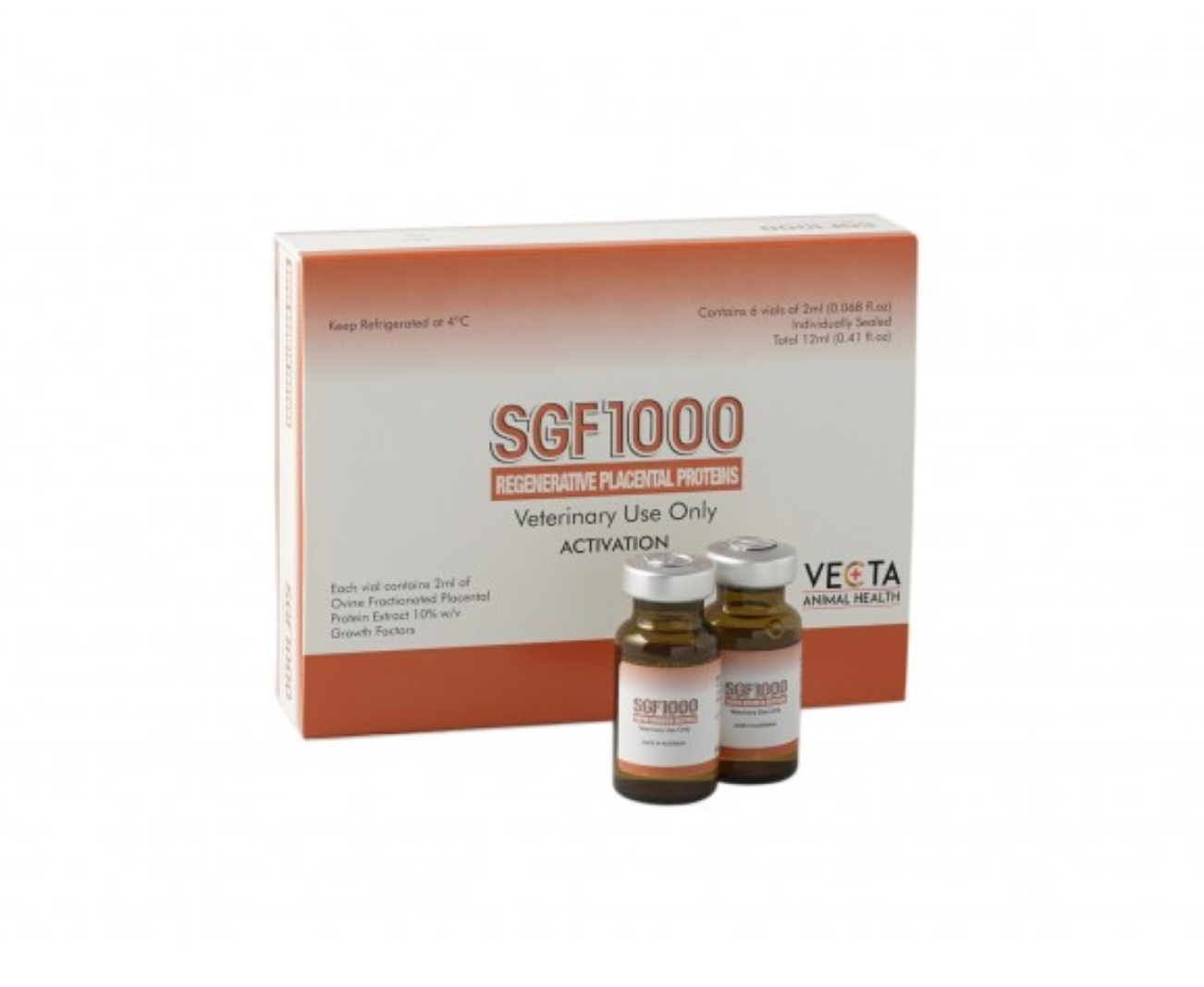
SGF1000 Activation
SGF 1000 Activation is an innovative formulation consisting of Regenerative Placental Proteins, Cytokines (polypeptide regulators of diverse embryological origin), Peptides, potent Growth Factors and Signaling Molecules derived from Ovine Placental Extract.
SGF1000 Activation is manufactured and purified through a patented low temperature process that involves homogenization, fractionation and ultra-filtration of ovine placental extract suspended in a liquid.
SGF-1000 is only for the serious competitor with the drive to be a champion. The advancements in SGF-1000 will take your horse or racing camel to a new level of competiveness. SGF-1000 is an innovative sterile liquid extract consisting of unique proteins, cytokines, peptides and growth factors derived from ovine placental extract.
Benefits:
- Boosts the immune system
- Health and wellness of internal organs and muscle tissue are optimized
- Rejuvenation and regeneration of cells
- in vital organs, muscles, tendons and body tissue
- Improved stamina and performance levels
- Increased energy levels, vigour, stamina and desire for physical activity
- It’s 100% safe for competition and has no banned substances.
- No adverse reactions
What are Growth Factors?
A Growth Factor is a group of proteins that initiate further growth of specific cells. Growth Factors play a major role in enhancing cell differentiation, cell division and preventing cell death.
When scientists began studying the effects of biological substances on cells and tissues in culture, they discovered peptide like hormone substances that were seen distinct from previously any established hormones. Because these substances were effective in activating the growth of cells and tissues, they were labelled growth factors.
Growth Factors In SGF 1000 Activation
Transforming Growth Factor Beta-1
Transforming Growth Factor Beta-1 controls multiple functions such as cell increases, differentiation and cell transformation. Another major role for TFGB-1 is that helps prevent apoptosis which the self destruction of cells. As TGFB-1 is found naturally in the body it plays an important role even before birth as it helps form blood vessels, regulate muscle tissue, wound healing, and immune system functions. It is abundant in the tissues that help construct the mammalian skeleton; this is where it helps regulate bone growth.
A published study has revealed that TGFB-1 is the component that depletes the most during the aging process of the Equine Articular Cartilage. A higher concentration found in knee joints of juvenile animals is the reason for their elevated capacity to heal cartilage defects. It is also interesting to note that TGFB-1 proteins were able to restore proteoglycan synthesis to control levels in the presence of Inteleukin-1B.
The molecular mechanisms which push equine airway remodeling remain undefined but aberrant signaling by the TGFB-1 is increasingly recognized as playing a major role . This protein is an important fibroblast chemotactic factor. The numbers of fibroblasts have been proven to correlate with the expression of TGFB-1. It can also be accredited that TGFB-1 induces differentiation of fibroblasts to myofibroblasts.
Transforming Growth Factor Beta-2
Some people like to think of the Transforming Growth Factor Beta-2 (TGFB-2) as the OCD protein because it only allows cell growth and cell division in a very controlled manner.
In a 1999 study, it saw TGFB-2 significantly stimulate the activity of gelatinases A and B which resulted in the Equine Ovarian Stromal Cells remodeling process.
Fibroblast Growth Factor Beta-2
Fibroblast Growth Factor Beta-2 (FGFB-2) is a very potent angiogenic protein which means it stimulates the process of sprouting new blood vessels from already existing ones. Its most common veterinary use is supplying rise to tissue granulation which fills up the remaining space during the early wound healing process.
A United Kingdom based study in 2005 saw that FGFB-2 played a very important role in modulating cartilage repair. Chondrocyte Progenitor Cells (CPC) represents the response to the damage of the cartilage. FGFB-2 stimulated and significantly increased the levels CPC, providing even further importance for supplementing FGFB-2.
Hepatocyte Growth Factor
Hepatocyte Growth Factor (HGF) proliferates the hepatic oval cells in the liver. The main role of the horse’s liver is to process vitamins, amino acids, and to drain the toxins from the body.
If the liver has been damaged then it cannot perform these functions as effectively as they normally would. Many vets throughout the world are using HGF for regeneration of damaged livers which results in the horse’s processing the vitamins, amino acids, and eliminating toxins from the body a lot more efficiently. The end result is that the horse is able to produce a lot more energy from its daily intake.
Culture of mammalian livers in vitro revealed the existence of a parallel developmental pathway controlled by HGF, which could rescue the mammalian phenotype independent of Smad activation. These pathways combined at the b1-integrin, the level of which is increased by HGF in the cultured mammalian livers. HGF treatment reversed the defects in cell proliferation and hepatic architecture in the Smad21/2; Smad31/2 livers.
Keratinocyte Growth Factor
Keratinocyte Growth Factor (KGF) attaches itself to the FGF-2 and is a member of its family as it encourages cell division. KGF seems to only focus on proliferation and migration of epithelial cells.
A study from the College of Veterinary Medicine at Cornell University found that during the immune response to Heaves, epithelial cells migrate from the vasculature and into the lung.
Cytokines then initiate remodeling of the lung parenchyma and increases the thickness of the airway smooth muscle resulting in epithelial cells to significantly increase. The objective of this process is to further increase effective respiratory conditions.
Epidermal Growth Factor
Epidermal Growth Factor (EGF) binds the Epidermal Growth Factor Receptor and has a close association the TGF family. In the horses body it encourages epithelial development which aids and accelerates the wound healing process by keratinocyte migration and the formation of granulation tissue.
Cambridge University have proven, the presence of EGF and its maintained upregulation during pregnancy in mares, and the presence of EGF receptors in the fetal allantochorion and maternal endometrium, suggest EGF influences marked growth of these two tissues during equine placentation .
Stem Cell Factor/Kit Ligand
Stem Cell Factor (SCF) or Kit Ligand (KL) binds to the c-kit receptor. SCF plays a crucial role in haematopoiesis which is the production blood cells and platelets occurring in the bone marrow.
As SGF-1000 is very effective for the use of horse breeding, it is the Kit Ligand gene which plays a major role. Western blot analysis confirmed the cross-activity of the Kit Ligand with horse testicular tissue.
In conclusion Kit Ligand is expressed in differentiating spermatogonia in stallions.
Fibronectin Like Peptide
This protein have the ability to associate with many different ligands and contribute to morphogenesis (the process of cells developing their shape). It also influences cell adhesion, migration, differentiation, and specific gene expression.
As Fibronectin Like Peptide increases keratinocyte and fibroblast cell migration into wounds it impressively increases vascularization.
Parathyroid Hormone-Related Protein
Parathyroid Hormone-Related Protein (PTHrP) interacts with the Parathyroid Hormone (PTH) which is produced by the Parathyroid Gland.
Expression of PTHrP have empirically been shown to possess potent anabolic effects on bone and is one of only two FDA approved therapies in this category.
PTHrP binds to Parathyroid Hormone-1 (PTH-1) receptor and initiates signal transduction with just as much potency of PTH. Markers for bone were significantly increased which supports its effects as an anabolic agent towards bone growth.
Presentation
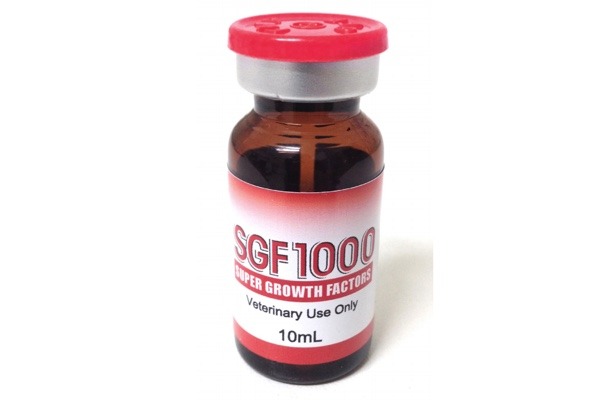
10ml vial
Veterinary Use Only



Reviews
There are no reviews yet.